Why western carmakers' retreat from electric risks dooming them to irrelevance
Western automakers are losing ground to China in the shift to electric vehicles, risking their future relevance as the world transitions to cleaner transportation.
news
Energy generation, storage, and grids.
Western automakers are losing ground to China in the shift to electric vehicles, risking their future relevance as the world transitions to cleaner transportation.
Chinese electric vehicle maker BYD has developed an ultra-fast EV charger that can charge vehicles nearly as quickly as filling up a gas tank, potentially easing one of the biggest barriers to wider EV adoption.
Starlink Mini's improved battery extends remote internet access, allowing more people to work and live in areas lacking traditional connectivity.

A government is considering limiting gas price increases to once per day. Researchers found the best time for the daily price reset is crucial to keeping prices down for drivers throughout the day.

New evidence suggests that when massive stars explode as supernovae, their dense cores may briefly transition to a state of deconfined quark matter, emitting a burst of high-frequency gravitational waves that could be detected by next-generation observatories.

Researchers have developed a robot system to automatically disassemble electric vehicle batteries, which could make recycling these batteries faster and more efficient as electric cars become more common.

Researchers found a new way to measure properties of a superconducting material called Nb3Sn, which could lead to improvements in high-powered magnets used in scientific research and medical equipment.

Researchers developed a new machine learning model to better predict wind farm power output, which could help make renewable energy more reliable and affordable for people.
Researchers found that a hidden scale invariance in particle physics could explain the formation of primordial black holes, quark-lepton nuggets, and gravitational waves - phenomena that may have shaped the early universe.
Scientists have developed highly accurate 'nuclear clocks' that could be tested soon, which could lead to more precise timekeeping and navigation for everyday devices and applications.
The new Nintendo Switch 2 will allow users to replace the battery themselves, in order to comply with upcoming EU rules. This means Switch 2 owners won't have to send in their console for battery replacement.
Scientists have created digital photo frames that can be powered directly by a smartphone's NFC chip, allowing people to easily display digital photos without the need for batteries or wires.
Anker's new portable power bank is on sale for a discounted price, making it an affordable option for people who need to charge their phones while on the go.
Anker's MagGo power bank is currently on sale for nearly $20 off, making it a good affordable option for people who need a portable charger to keep their smartphone powered up while out and about.

A new recycling method can convert used plastic bottles into high-quality raw materials and clean hydrogen fuel, potentially reducing waste and providing a sustainable source of materials.
Researchers have developed a new recycling method that can convert waste plastic bottles into high-quality raw materials and clean hydrogen fuel, reducing plastic waste and providing a sustainable energy source.
Google's battery-powered Nest Doorbell is $40 off, making it more affordable for people to get a convenient, peace-of-mind home security device.

Cyberattacks are increasingly targeting power grids, forcing utilities to bolster defenses against threats like vandalism and drone strikes to keep the lights on during emergencies.

The ALICE experiment has found possible signs of an extremely hot, dense state of matter similar to what existed right after the Big Bang, suggesting even smaller collisions between protons can produce these conditions. This provides new clues about the early universe.
Researchers developed a neural network model that can predict how nuclear reactor materials like steel will withstand wear and tear over time, which helps ensure reactor safety and longevity.
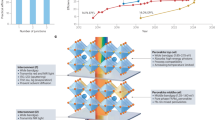
Researchers made solar cells more efficient by improving how they capture and manage light and electrical charges. This could lead to cheaper, more accessible solar power for homes and businesses.
Researchers developed a new machine learning model to better predict wind farm power output, which could help make renewable energy more reliable and affordable for people.
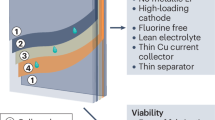
Researchers developed a new battery design that can store energy without a traditional anode. This could lead to safer, lighter, and more energy-dense batteries for electric vehicles and portable electronics.

A new machine learning system can plan more fuel-efficient maritime shipping routes, helping reduce greenhouse gas emissions from international transportation.
Researchers have developed a robot system to automatically disassemble electric vehicle batteries, which could make recycling these batteries faster and more efficient as electric cars become more common.
A government is considering limiting gas price increases to once per day. Researchers found the best time for the daily price reset is crucial to keeping prices down for drivers throughout the day.
Gravitational wave observations of merging neutron stars can provide insights into the inner workings of these dense objects, shedding light on the fundamental physics of extreme matter.

Researchers developed AI models to simulate power grid components, which could make it faster and easier to model the electricity grid. This could help engineers better predict and manage the grid as renewable energy becomes more common.
Planar lithium metal deposition could enable practical anode-free batteries, which would be lighter and have higher energy density than current lithium-ion batteries.

In some low-income countries, locally-owned diesel microgrids often exploit customers due to lack of regulation, harming people's health and the environment. Transitioning to cleaner, regulated community microgrids could improve energy access and sustainability.
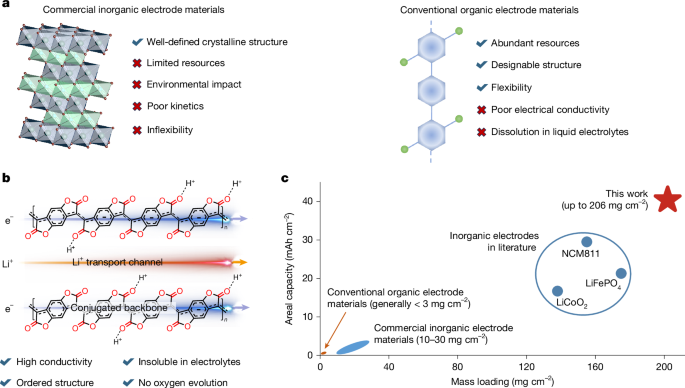
Scientists have developed a new type of battery using a polymer material that can store and release lithium efficiently, allowing for safer and more reliable batteries across a wide range of temperatures.

Federated learning can help accurately forecast electricity demand from electric vehicles, which is important for planning power grid infrastructure and managing renewable energy sources.
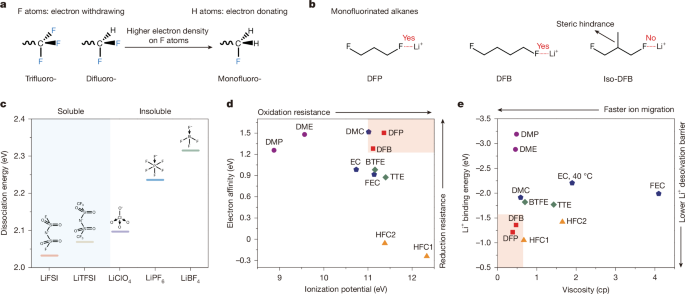
Researchers developed a new type of electrolyte that allows lithium-metal batteries to store more energy and operate in colder temperatures, potentially enabling longer-lasting and more capable portable electronics and electric vehicles.
Researchers found a new way to measure properties of a superconducting material called Nb3Sn, which could lead to improvements in high-powered magnets used in scientific research and medical equipment.
New method makes it easier to understand particle interactions and cross-section data, which is important for improving the accuracy of particle physics experiments and simulations.
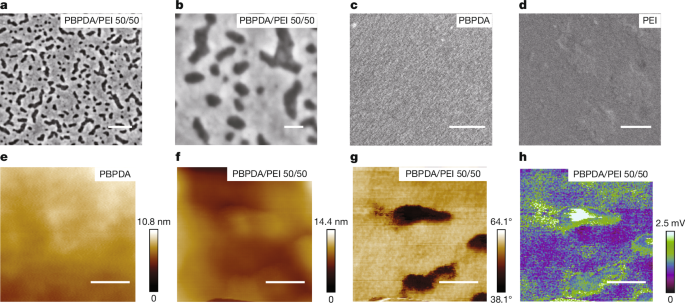
Researchers created a new kind of polymer material that can store a lot of energy, which could lead to improved batteries and energy storage devices for homes and electric vehicles.
Researchers developed a new neural network model that can quickly predict how neutrons move in nuclear reactors, potentially improving safety and efficiency.
Researchers have developed a new machine learning technique to accurately track the charging state of silicon in lithium-ion batteries, which could help improve battery performance and safety.