Story
AIdentifyAGE Ontology for Decision Support in Forensic Dental Age Assessment
Key takeaway
A new AI ontology helps forensic experts determine the age of individuals based on dental scans, which is crucial for legal decisions involving undocumented minors.
Quick Explainer
The AIdentifyAGE ontology provides a standardized framework for representing and integrating the complex forensic dental age assessment (DAA) process, which involves manual and AI-based methods, radiographic data, reference studies, and legal context. By formally modeling the key concepts, relationships, and workflows, the ontology enables consistent interpretation, integration, and reuse of DAA data across clinical, forensic, and judicial systems. This supports transparency, reproducibility, and the development of ontology-driven decision support tools to assist forensic experts and legal authorities in making well-informed age determinations, which are critical in medico-legal contexts like immigration cases.
Deep Dive
Technical Deep Dive: AIdentifyAGE Ontology for Forensic Dental Age Assessment
Overview
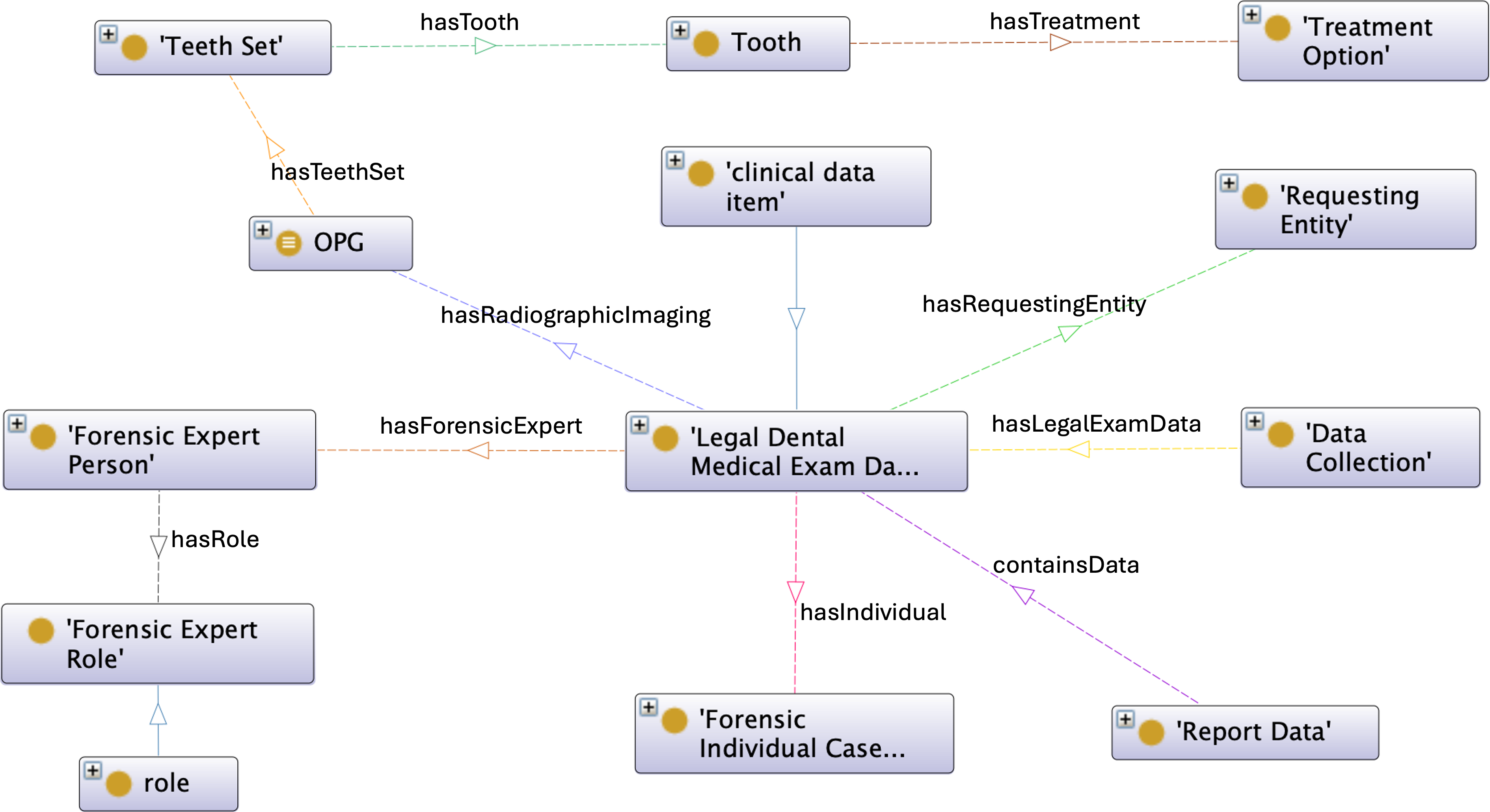
The AIdentifyAGE ontology provides a standardized, semantically coherent framework for representing and integrating manual and AI-assisted forensic dental age assessment (DAA) workflows. It models the complete medico-legal process, including judicial context, individual-level data, radiographic imaging, developmental assessment methods, statistical reference studies, and AI estimation models.
By formally defining the relevant concepts, relationships, and processes, the ontology enables consistent interpretation, integration, and reuse of DAA data across clinical, forensic, and judicial systems. This supports transparency, reproducibility, and the development of ontology-driven decision support tools to assist forensic experts and judicial authorities.
Problem & Context
Accurately assessing the age of undocumented individuals, particularly unaccompanied minors, is crucial in forensic and judicial decision-making, as it directly impacts access to legal protection, social services, and applicable judicial frameworks. Dental age assessment is widely recognized as one of the most reliable biological approaches, but current practices are challenged by:
- Methodological heterogeneity and lack of harmonization across diverse recommendations and guidelines
- Fragmented representation of clinical data, radiographic findings, reference studies, and legal requirements
- Limited interoperability between clinical, forensic, and legal information systems
- Growing adoption of AI-based age estimation methods, raising transparency and explainability concerns
These limitations hinder the transparency, reproducibility, and integration of DAA workflows into decision support systems intended for medico-legal and judicial contexts.
Methodology
The AIdentifyAGE ontology was developed through a structured process involving:
- Ontology Knowledge-base Creation: Establishing the ontology scope and defining the characteristics of the terms to be included, using the Ontology for Biomedical Investigations (OBI) as the upper-level framework.
- Ontology Definition Chain:
- Inserting semantic and scientific meaning to each term, informed by established glossaries and expert consensus.
- Identifying similarities between terms and defining equivalence relations to preserve semantic alignment.
- Linking to relevant external ontologies to ensure coherent and interoperable knowledge representation.
- Ontology Validation Process:
- Verifying logical consistency using the HermiT reasoner.
- Assessing functional adequacy through competency questions and SPARQL queries.
- Evaluating interoperability by aligning with major biomedical and AI ontologies.
Data & Experimental Setup
The ontology models three key domains:
- Judicial/Forensic Domain: Representing information related to the legal dental medical examination, including case identifiers, requesting authorities, forensic experts, and individual-level data.
- Manual Dental Age Assessment Domain: Capturing tooth developmental stage scoring, reference study application, and statistical outputs (age interval, mean, standard deviation).
- AI-based Dental Age Assessment Domain: Modeling machine learning workflows, including data collections, model characteristics, inference processes, and model outputs.
The ontology integrates 1,448 classes, 97 object properties, and 56 data properties, drawing from established biomedical, dental, and machine learning ontologies to ensure interoperability and FAIR compliance.
Results
The AIdentifyAGE ontology provides a structured, semantically coherent knowledge representation that supports:
- Consistent interpretation and integration of heterogeneous DAA data (clinical, radiographic, methodological, statistical, AI-based)
- Transparent linkage between tooth-level observations, population-specific reference studies, and legally relevant age conclusions
- Ontology-driven decision support systems to assist forensic experts and judicial authorities in age-related determinations
The ontology's design enables answering competency questions related to the medico-legal DAA workflow, such as retrieving both manual and AI-based assessment results, including statistical outputs and model provenance.
Interpretation
By formally modeling the complete forensic and legal chain for age assessment, the AIdentifyAGE ontology addresses a critical gap in medical informatics. Unlike existing ontologies focused on clinical or anatomical aspects in isolation, this ontology explicitly integrates judicial context, expert workflows, dental development methods, radiographic data, and AI-based estimation models within a unified semantic framework.
This enables consistent interpretation, interoperable data representation, and transparent linkage between observations, methods, and outcomes — key requirements for decision support in medico-legal environments facing increasing regulatory and ethical scrutiny of algorithmic systems.
Limitations & Uncertainties
While ontology-based approaches offer significant benefits, they also introduce limitations:
- Knowledge acquisition and maintenance require sustained expert involvement, which can be resource-intensive.
- No ontology can fully eliminate the inherent uncertainties associated with biological age estimation.
- The ontology supports explainability but does not itself guarantee the correctness of underlying models or reference studies, which remain dependent on empirical validation.
Future work should focus on large-scale deployment, integration with institutional information systems, and empirical evaluation of the ontology's decision-support effectiveness in real forensic workflows.
What Comes Next
The AIdentifyAGE ontology provides a reusable, domain-specific semantic foundation for enhancing consistency, interoperability, and transparency in forensic dental age assessment practices. Its development marks an important step towards ontology-driven decision support systems capable of assisting forensic experts and judicial authorities in complex medico-legal contexts.
Next steps include:
- Expanding the ontology's knowledge base and coverage based on feedback from broader user communities
- Integrating the ontology with clinical, forensic, and judicial information systems to enable seamless data exchange and computational reasoning
- Empirically evaluating the ontology's impact on the quality, reliability, and defensibility of age assessment procedures in real-world forensic settings
By establishing a robust, FAIR-compliant semantic framework for forensic DAA, the AIdentifyAGE ontology lays the groundwork for more transparent, reproducible, and ethically aligned decision support in this critical medico-legal domain.