Story
Toward Agentic Software Engineering Beyond Code: Framing Vision, Values, and Vocabulary
Key takeaway
Researchers are exploring how advanced AI could fundamentally transform software engineering, moving beyond just writing code to also shaping the vision, values, and vocabulary of software systems - changes that could have broad societal implications.
Quick Explainer
The paper proposes a "whole of process" vision for Agentic Software Engineering (ASE), expanding its scope beyond just code-related activities. This holistic approach aims to enable ASE as a process-level paradigm shift in software engineering, rather than just a coding accelerator. The key idea is to extend ASE across the full software engineering lifecycle, including requirements, design, operations, and other socio-technical concerns. The paper outlines a set of "CRAFT" principles - Comprehensive, Responsible, Adaptive, Foundational, and Translational - to guide the development of ASE. Additionally, it emphasizes the importance of establishing well-defined terminology and vocabulary for the emerging ASE discipline.
Deep Dive
Technical Deep Dive: Toward Agentic Software Engineering Beyond Code
Overview
The paper proposes a "whole of process" vision for Agentic Software Engineering (ASE), expanding the scope beyond just code-related activities. This vision aims to enable ASE as a process-level paradigm shift in software engineering (SE), rather than just a coding accelerator.
The key ideas are:
- Extend the scope of ASE beyond coding to encompass the full software engineering lifecycle, including requirements, design, operations, and other socio-technical concerns.
- Propose a set of "CRAFT" values and principles to guide the development of ASE, covering comprehensiveness, responsibility, adaptability, foundational work, and translational research.
- Provide guidance on developing well-defined terminology and vocabulary for the emerging ASE discipline.
Context
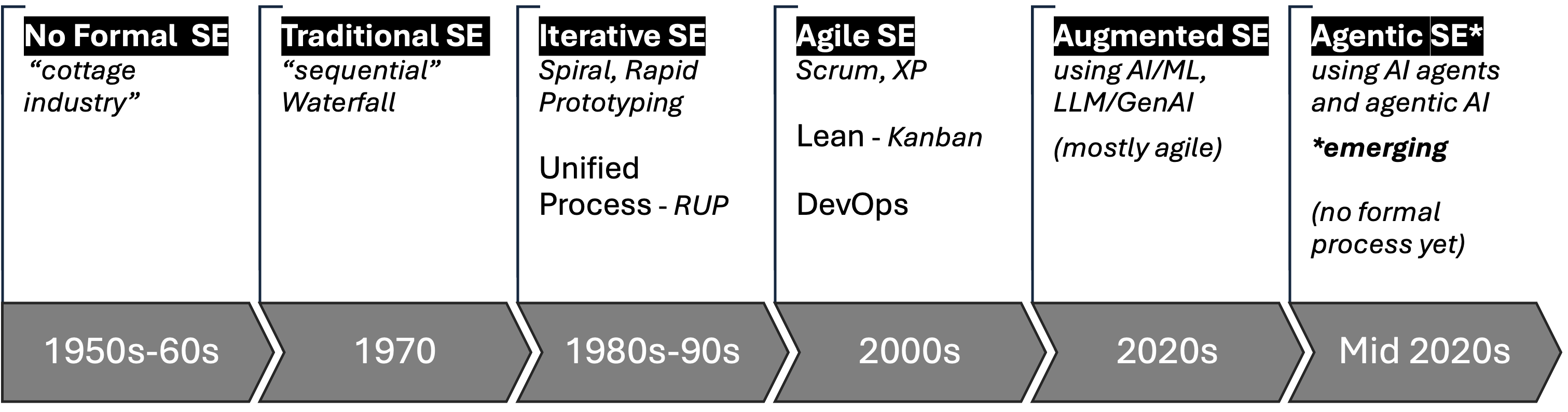
- Software engineering has evolved over decades, with various process models and frameworks proposed, from Waterfall to Agile.
- The advent of agentic AI (e.g. SWE-agent, Jules, Codex, Devin) is now driving visions of "agentic software engineering" focused on code-related activities.
- However, early evidence suggests the need to expand the scope of ASE beyond just coding, to address wider socio-technical concerns across the software engineering lifecycle.
Proposed Vision
The paper proposes a "whole of process" vision for ASE, covering the following areas:
- Agentic Ethical Alignment: Ensuring alignment with safe AI laws and regulations.
- Agentic Requirements Engineering: Handling customer, user, and ethical requirements.
- Agentic Design: Architecture, UX, and design for human benefit.
- Agentic Development: Code generation, testing, reviewing, repairing, etc.
- Agentic Operations: Deployment, maintenance, and DevOps.
This vision sees human and agent actors collaborating across these areas, with varying levels of AI agency under human control.
Key Principles
The paper proposes a set of "CRAFT" principles to guide ASE:
- Comprehensive: Take a "whole of process" approach, and consider human, agentic, and socio-technical aspects.
- Responsible: Apply ethics-by-design and ensure sustainability.
- Adaptive: Maintain industrial and socio-technical relevance by adapting to new AI models and paradigms.
- Foundational: Develop foundational knowledge and solutions beyond just coding.
- Translational: Build awareness, education, and actionable guidelines to enable research translation into practice.
Vocabulary Guidance
The paper emphasizes the importance of developing well-defined terminology and vocabulary for the emerging ASE discipline, highlighting considerations around:
- Relevance: Fit for purpose and domain context.
- Coverage: Conceptual completeness and accuracy.
- Acceptance: Recognition and adoption by the community.
- Consistency: Uniformity of use, stability, and adaptability.
- Philosophical alignment: Reflexivity and awareness of underlying assumptions, power dynamics, and fairness.
Conclusion
The paper calls for a deliberate and desirable paradigm shift in software engineering, driven by the emerging field of agentic software engineering. It provides a holistic vision, guiding principles, and vocabulary recommendations to steer the community towards establishing the core foundations of ASE.
Sources: