Story
NEXUS : A compact neural architecture for high-resolution spatiotemporal air quality forecasting in Delhi Nationa Capital Region
Key takeaway
Researchers developed a new AI model that can forecast air pollution levels across Delhi with high resolution, helping policymakers and the public better plan for dangerous smog events that threaten public health.
Quick Explainer
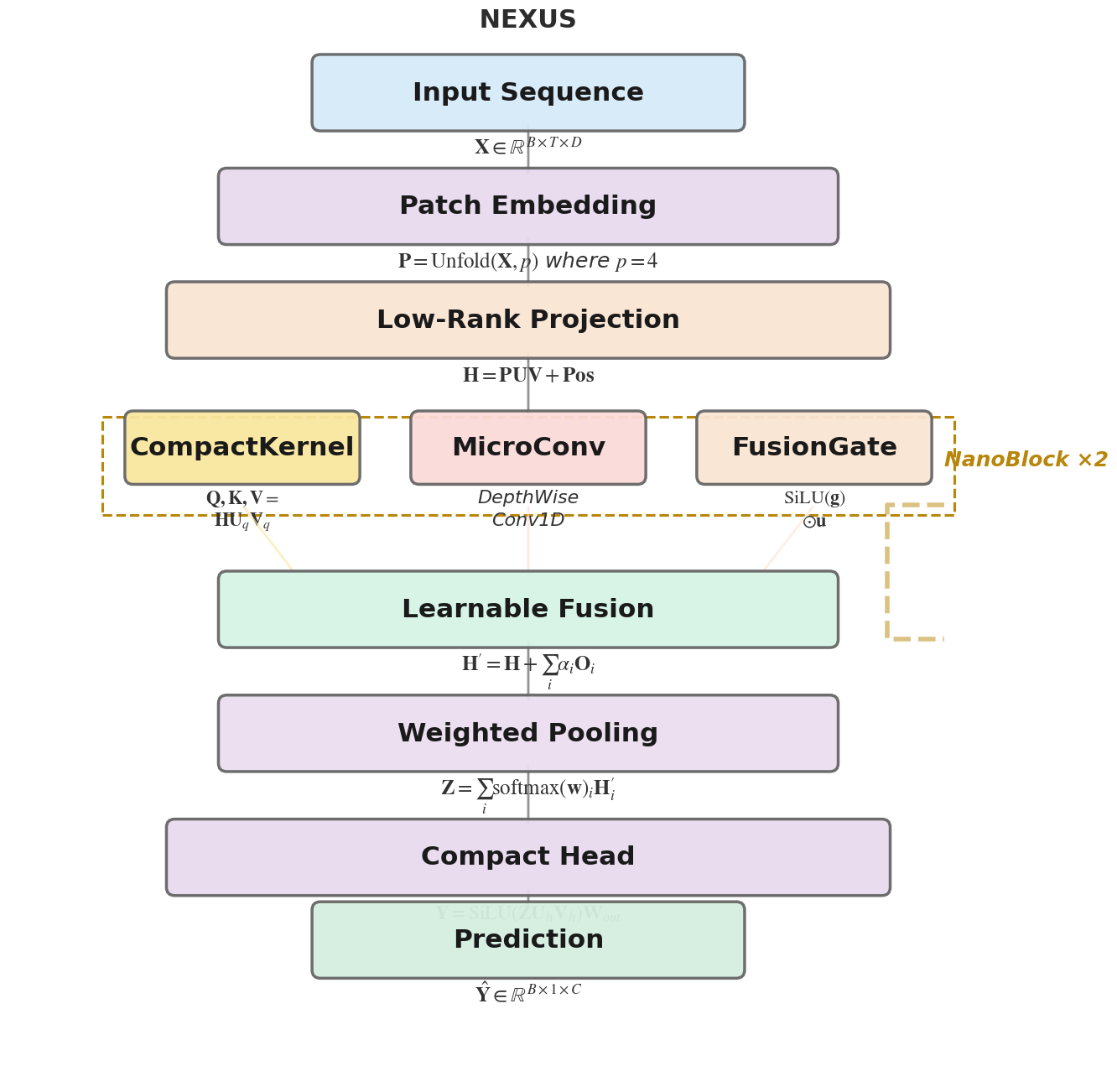
NEXUS is a compact neural network architecture designed to accurately forecast air pollution levels in Delhi, India, a region with severe air quality challenges. The key innovations in NEXUS are patch embedding to reduce sequence length, low-rank projections to filter noise while preserving dominant patterns, and parallel pathways for multi-scale feature extraction. By leveraging these techniques, NEXUS can capture the complex interactions between emissions, meteorology, and atmospheric chemistry that drive air pollution dynamics, while maintaining computational efficiency suitable for real-time deployment on resource-constrained infrastructure. This compact yet powerful approach outperforms prior transformer-based models, highlighting the potential for specialized neural architectures to tackle complex environmental forecasting tasks.
Deep Dive
Technical Deep Dive: NEXUS - A Compact Neural Architecture for Air Quality Forecasting in Delhi NCR
Overview
This study introduces a compact neural architecture called NEXUS that achieves state-of-the-art performance for spatiotemporal air quality forecasting in Delhi National Capital Region (NCR), a region with severe pollution challenges. NEXUS leverages patch embedding, low-rank projections, and adaptive fusion to produce highly accurate predictions (R^2 exceeding 0.94 for CO, 0.91 for NO, and 0.95 for SO2) using only 18,748 parameters - a 94% reduction from prior transformer-based approaches.
The key architectural innovations enable NEXUS to capture the complex interactions between emissions, meteorology, and atmospheric chemistry that drive air pollution dynamics, while maintaining computational efficiency suitable for real-time deployment on resource-constrained infrastructure. Comprehensive analyses uncover crucial insights about diurnal cycles, seasonal patterns, meteorological controls, and spatial heterogeneity - findings that directly inform policy decisions for air quality management.
Problem & Context
- Air pollution poses a major public health challenge, contributing to ~7 million premature deaths globally each year
- Delhi NCR, with over 30 million residents, is among the world's most polluted urban regions
- Pollution levels routinely exceed WHO guidelines by 10x or more during severe winter episodes, triggering emergency interventions
- Long-term exposure causes cardiovascular disease, lung cancer, cognitive decline, and disproportionately harms children
- Accurate air quality forecasting systems are critical for issuing timely health advisories and deploying preemptive pollution control measures
Methodology
- Compiled 4 years (2018-2021) of pollutant (CO, NO, SO2) and meteorological data across 16 spatial grids in Delhi NCR
- Constructed supervised learning samples using 21-day sliding windows, forecasting 3 hours ahead
- Partitioned data into training (2018-2020), validation (2021 Jan-Jun), and test (2021 Jul-Dec) periods
- Introduced the NEXUS architecture featuring:
- Patch embedding to reduce sequence length
- Low-rank projections to filter noise while preserving dominant modes
- Parallel NanoBlock pathways (CompactKernel, MicroConv, FusionGate) for multi-scale feature extraction
- Weighted spatial pooling to emphasize informative monitoring sites
- Compared to baselines: SCINet, Autoformer, FEDformer
Results
- NEXUS achieves R^2 scores of 0.9404 (CO), 0.9140 (NO), and 0.9521 (SO2)
- Outperforms baselines by 6.95% on average R^2, with 94% fewer parameters than FEDformer
- Inference is 6x faster than FEDformer, enabling real-time deployment
- Captures sustained low concentrations during summer monsoon and dramatic spikes during winter pollution episodes
Interpretation
- Strong negative correlations between pollutants and temperature/wind speed confirm their dominant role in governing atmospheric stability and dispersion
- Diurnal patterns show morning/evening traffic emission peaks and afternoon boundary layer dilution
- Spatial analysis reveals systematic gradients, with northwest industrial areas experiencing 2x higher concentrations during episodes
- Monthly patterns exhibit pronounced November-December peaks driven by temperature inversions and agricultural burning
Limitations & Uncertainties
- Performance assessed only on Delhi NCR - applicability to other regions requires further study
- Interpretability focused on statistical associations, not causal mechanisms
- Emissions and atmospheric chemistry details not fully resolved by current data sources
What Comes Next
- Incorporate emissions inventories and chemistry models for deeper mechanistic understanding
- Expand geographical scope to other major urban airsheds in India and globally
- Integrate NEXUS into operational air quality forecasting and early warning systems